Suggesting Finance
No Result
View All Result
  • Login
  • Home
  • Business
  • Finance
  • Mortgage
  • Banking
  • Credit Cards
  • Investing
  • Loans
  • Saving
  • Taxes
  • More
    • Markets
    • Economy
    • Real Estate
    • Crypto
Subscribe For Alerts
  • Home
  • Business
  • Finance
  • Mortgage
  • Banking
  • Credit Cards
  • Investing
  • Loans
  • Saving
  • Taxes
  • More
    • Markets
    • Economy
    • Real Estate
    • Crypto
No Result
View All Result
Suggesting Finance
No Result
View All Result
Home Economy

JPMorgan’s Dimon and BlackRock’s Fink both see parallels to the 1970s

News Room by News Room
October 24, 2023
Reading Time: 2 mins read
0
JPMorgan’s Dimon and BlackRock’s Fink both see parallels to the 1970s

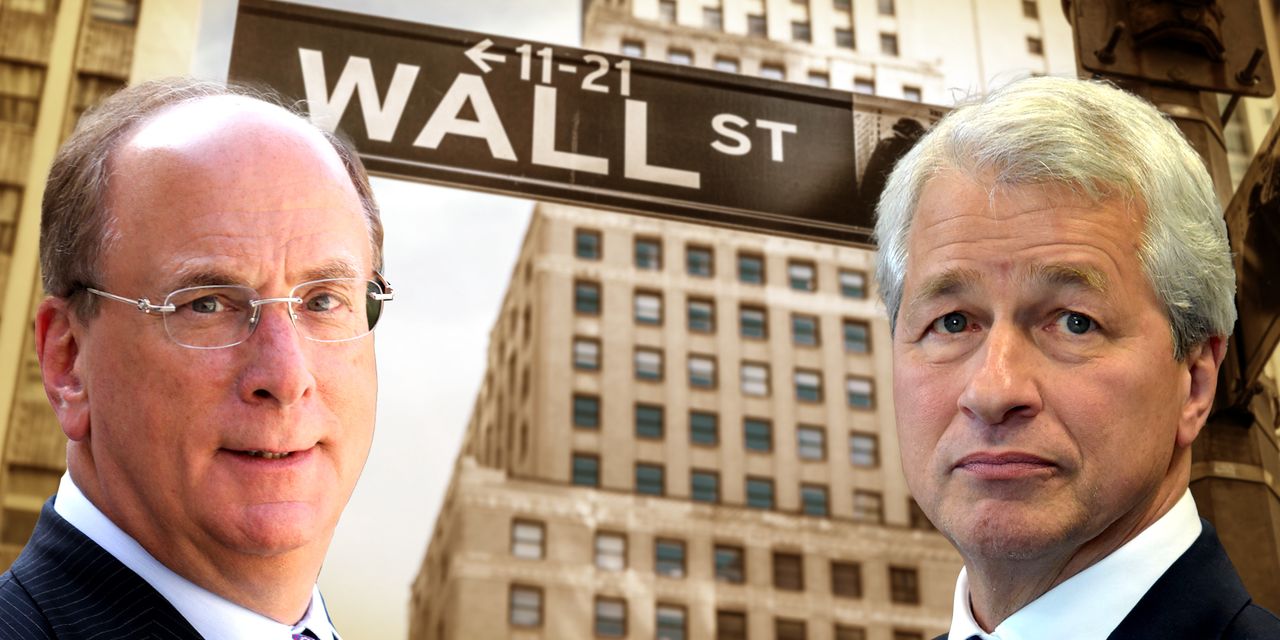
JPMorgan Chairman and CEO Jamie Dimon and BlackRock CEO Larry Fink both have one decade in mind — the 1970s.

Both were speaking at the Future Investment Initiative in Saudi Arabia, or the so-called Davos in the Desert. In the U.S., Dimon noted the highest levels of debt during peacetime. “There’s kind of this omnipotent feeling that central banks and governments can manage through all this stuff,” he said. “I’m cautious.”

Dimon, who made headlines when he suggested U.S. interest rates might go to 7%, made similar comments again on Tuesday, talking of the possibility the whole interest rate curve might rise by 100 basis points.

“I would urge people to be prepared for it. I don’t know if it’s going to happen. But I look at what we’re seeing today is more like the 70s,” he said.

The JPMorgan
JPM,
+0.04%
chief executive also said that while he stood behind the ideas of ESG, “governments want to whack-a-mole and force it, but no carbon taxes, no rational way to go about it.” He lamented that in the U.S., companies can’t build pipelines to reduce coal emissions, and that it’s difficult to get permits to build solar and wind projects. He also said nuclear proliferation rather than climate change is the bigger threat to mankind.

BlackRock’s
BLK,
-0.13%
Fink made similar comments. “This reminds me of the 1970s,” he said. “And the ’70s was all about bad policy. Today is about bad policy again, and big macro shifts,” he said.

Fink counted a number of inflationary forces, including the politicalization of supply chains, populism, and restrictions on legal immigration. Conflating the fiscal deficit for debt, he noted the big surge from roughly $8 trillion at the beginning of the century to $33 trillion now, which he also said was inflationary, as was the rise in the Federal Reserve’s balance sheet.

“So as a result of that, interest rates are going to remain higher,” he said. The yield on the U.S. 10-year Treasury
BX:TMUBMUSD10Y
on Monday broke through 5% for the first time in 16 years, though it’s headed lower since then.

Asked whether there would be a hard or soft landing for the U.S. economy next year, Fink said, neither, pointing to fiscal stimulus which is still entering the economy, through the Chips Act and the infrastructure spending in the Inflation Reduction Act.

Read the full article here

ShareTweetSendSend

Related Posts

Jamie Dimon says US has 'become like Europe' on defense, and it's holding the country back
Economy

Jamie Dimon says New York, other cities face worker 'exodus' as lawmakers push higher taxes

April 20, 2026
Used car prices hit their highest level in nearly 3 years as wholesale demand stays strong
Economy

Used car prices hit their highest level in nearly 3 years as wholesale demand stays strong

April 19, 2026
More American workers are struggling than thriving for first time: poll
Economy

US workers increasingly trapped in the 'Great Detachment' as hiring slows, report shows

April 18, 2026
Fed official says interest rate hike possible as gas prices, inflation remain elevated
Economy

Fed official says interest rate hike possible as gas prices, inflation remain elevated

April 17, 2026
Tax filing season is officially here: what you need to know
Economy

5 common mistakes that could be costing American taxpayers thousands of dollars every year

April 16, 2026
Is grocery relief a myth? Why coffee and beef prices are erasing your savings at the checkout
Economy

Is grocery relief a myth? Why coffee and beef prices are erasing your savings at the checkout

April 15, 2026

Leave a Reply Cancel reply

Your email address will not be published. Required fields are marked *

Suggesting Finance

We bring you the best Premium WordPress Themes that perfect for news, magazine, personal blog, etc. Visit our landing page to see all features & demos.

LEARN MORE »

Recent Posts

  • Jamie Dimon says New York, other cities face worker 'exodus' as lawmakers push higher taxes
  • Used car prices hit their highest level in nearly 3 years as wholesale demand stays strong
  • Mortgage rates fall as Iran ceasefire eases market tensions

Categories

  • Banking
  • Business
  • Credit Cards
  • Crypto
  • Economy
  • Finance
  • Investing
  • Loans
  • Markets
  • Mortgage
  • Real Estate
  • Saving
  • Taxes
  • Uncategorized
  • Privacy Policy
  • Terms of use
  • Advertise
  • Contact

© 2023 Suggesting Finance. All Rights Reserved.

No Result
View All Result
  • Home
  • Business
  • Finance
  • Mortgage
  • Banking
  • Credit Cards
  • Investing
  • Loans
  • Saving
  • Taxes
  • More
    • Markets
    • Economy
    • Real Estate
    • Crypto

© 2023 Suggesting Finance. All Rights Reserved.

Welcome Back!

Login to your account below

Forgotten Password?

Retrieve your password

Please enter your username or email address to reset your password.

Log In
This website uses cookies. By continuing to use this website you are giving consent to cookies being used. Visit our Privacy and Cookie Policy.